

Autonomy
Real choice, adjustable pace, the right not to play.
Forced participation, a reward that conditions every action.
Points, quests and levels can genuinely support learning — but only when they target a precise behaviour and leave pedagogy in charge. Here is what the studies say, how to use it without getting it wrong, and why we built Class Odyssey this way.
Gamification means using game-design elements in contexts that are not games (Deterding, Dixon, Khaled & Nacke, 2011). In a classroom, that means adding familiar game mechanics — points, levels, quests, badges, challenges, visible progress, cooperation — to a learning activity that would otherwise remain an ordinary school task.
It is not about turning the lesson into a full game, nor about “having fun” for its own sake. The goal is more precise: to make certain learning-useful behaviours more frequent — starting a task, practising more, persisting through difficulty, revisiting mistakes, asking for feedback, cooperating.
The right question is not “how do I make the lesson more fun?” but “which learning behaviour is missing, and which minimal mechanic can support it?”
Publications sometimes use these terms interchangeably. Evidence for one does not automatically prove the effectiveness of the others.
Gamification
The activity stays a learning task
Game elements are added to an unchanged lesson: a mastery map, challenges, levels.
Game-based learning
The game carries the learning
Game-based learning: a full game serves as the medium, for example a board game about fractions.
Serious game
The game is built for something other than play
A simulation designed first to train, such as a clinical or professional drill.
Game elements almost never act directly on knowledge. They first change a behaviour or a feeling, which then influences cognitive activity — and it is that activity that produces learning.
According to the theory of gamified learning of Landers (2014), the teaching content acts directly on learning; game elements act upstream.
Consequence: each mechanic must target an explicit intermediate behaviour tied to the intended knowledge. A system that rewards click volume guarantees neither understanding nor retention.
Self-determination theory (Ryan & Deci, 2000) explains why design matters more than decoration. Effective gamification supports three basic needs; poorly designed, it attacks them.
Autonomy
Real choice, adjustable pace, the right not to play.
Forced participation, a reward that conditions every action.
Competence
Adjusted challenge, clear criteria, multiple attempts, useful feedback.
Arbitrary difficulty, a leaderboard that publicly exposes failure.
Belonging
Cooperation, complementary roles, a shared goal.
Permanent rivalry, social comparison, exclusion.
A reward is not harmful in itself: it becomes so when it is experienced as controlling (Deci, Koestner & Ryan, 1999). A badge that attests a skill informs; a badge that makes pupils obey shifts attention from learning to the reward.
Gamification replaces none of these mechanisms: it can only support them. The four strongest:
Active retrieval
Testing yourself rather than re-reading. Producing an answer before seeing the solution strengthens long-term memory (Roediger & Karpicke, 2006).
Spaced repetition
Reviewing at growing intervals, especially what was missed, rather than revising everything in one block (Cepeda et al., 2006).
Explanatory feedback
Saying where we are going, where we are and what the next step is (Hattie & Timperley, 2007): “+100 XP” teaches nothing.
Managed cognitive load
Too many currencies, sounds, animations and rules draw attention away from the knowledge (Sweller, 1988).
Research on gamification in education now rests on many meta-analyses — statistical syntheses of dozens of studies. The overall verdict is positive, but conditional: the effect depends heavily on the quality of the design.
Cognition / learning Motivation Performance Highly heterogeneous estimate
| Study | Corpus | Average effect | Key takeaway |
|---|---|---|---|
| Sailer & Homner (2020) | 19 cognitive studies, N = 1,686 | g = 0.49 cognitive 0.36 motivation · 0.25 behaviour |
The most reliable estimate: a small-to-medium effect on cognitive outcomes. |
| Bai, Hew & Huang (2020) | 30 interventions, N = 3,202 | g = 0.50 learning | A positive medium effect, despite very diverse interventions. |
| Li, Hew & Du (2024) | 35 interventions, N = 2,500 | g = 0.26 intrinsic motivation | Intrinsic motivation improves little: design is decisive. |
| Zeng et al. (2024) | 22 studies, N = 3,144 | g = 0.78 performance | A larger effect, but very scattered contexts (heterogeneity ≈ 94%). |
| Kurnaz & Koçtürk (2025) | 31 K-12 studies, N ≈ 2,907 | g = 0.65 motivation | Mostly quasi-experimental studies: treat with caution. |
| Slamet & Meng (2025) | 35 collaborative studies | d = 0.88 cognitive | A clear benefit when gamification is embedded in teamwork. |
g and d measure the average gap between a gamified group and a control group, expressed in standard deviations. Prudent values sit around 0.25 to 0.50: a real gain, comparable to other effective teaching interventions — provided the learning activity itself is solid.
On average, gamification helps. In practice, it only helps if you know which behaviour you are trying to establish.
The difference rarely lies in the tools: it lies in what the system actually rewards and in the room it leaves for pupil autonomy.
What supports learning
What can harm
Ethics, accessibility, data
Explain the purpose and the rules, distinguish the mandatory from the optional, guarantee an alternative to competition, never expose failure, and collect only the data needed for teaching regulation. Aim for WCAG 2.2 and universal design for learning (UDL): information never carried by colour alone, motion that can be disabled, adjustable time.
A deliberate order: the mechanic is chosen last, never first. It exists only to support a precise behaviour.
What should the pupil be able to explain, recall, distinguish, produce or transfer?
Which product or performance will show that it is acquired, outside the game system?
Retrieval, comparison, explanation, problem-solving, application, creation or cooperation.
Start, persist, practise, ask for feedback, correct a mistake, space out reviews.
Only the element that supports that behaviour — then check that no competing goal (speed, volume, score) takes over.
Finally, measure outside the system: immediate learning, delayed retention, transfer, and different effects across pupils.
Class Odyssey is the app we built to apply these principles in 7P and 8P English lessons: a class adventure, projected on the screen, where every pupil grows a hero named after them.
The app turns English progress into a collective adventure. Each pupil has a named character who gains experience, levels up and unlocks visual items through the year. Effort — homework done, vocabulary learned — becomes visible and shareable, without slowing the lesson down.
Because it makes concrete the conditions that, in the research, make the difference: personal progress, immediate feedback, autonomy, cooperation and rewards that inform rather than control. The game is not a reward bolted onto the lesson: it gives a readable shape to what pupils already accomplish.
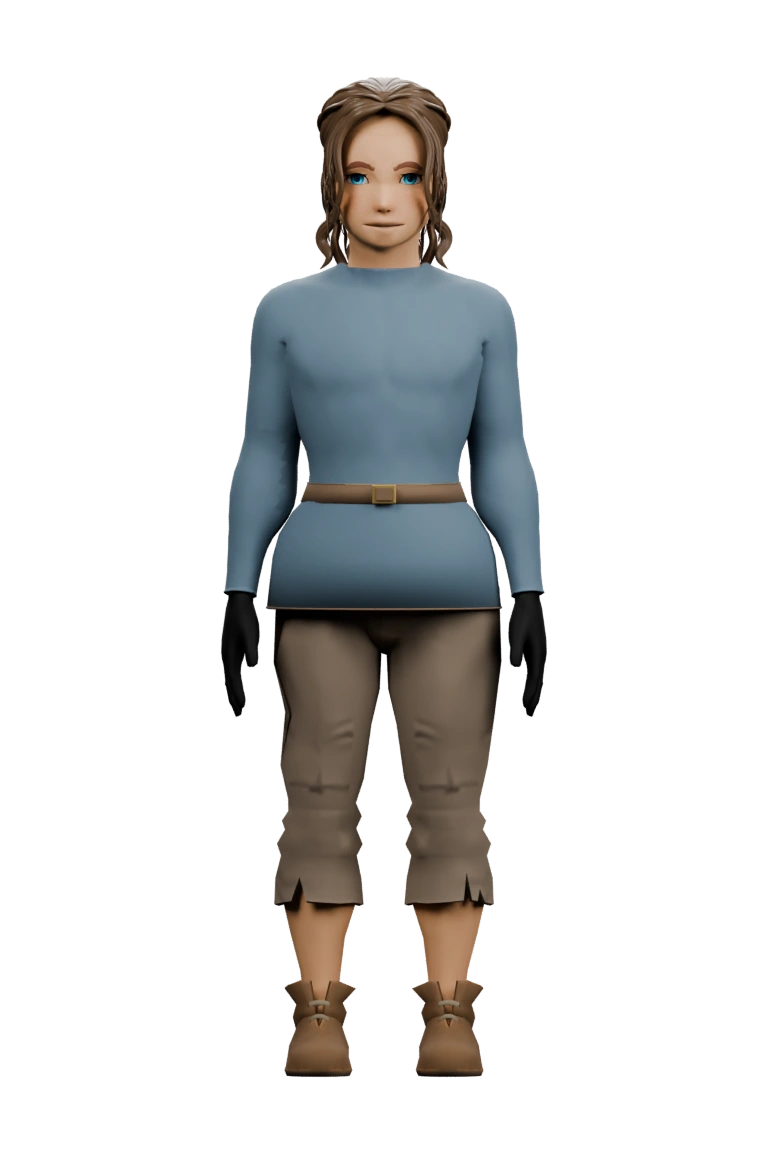
Mila
Ranger
620 XP to level 4
Progress compared with yourself
Individual XP and levels, shown side by side: you measure yourself against your own path, not against others’ rank.
Immediate, readable feedback
The teacher console grants XP, HP or coins in seconds, while the lesson continues.
Autonomy
Each pupil chooses and customises their hero: outfit, title, hair, colours, bought with their coins.
Visible competence
Level thresholds unlock equipment and titles: progress is seen rather than decreed.
Cooperation
Rewards can target the whole class, and healing is given collectively when the group moves forward.
Learning first
XP rewards homework and vocabulary — learning effort, never mere attendance.
Safeguards
Class rules on display, no permanent public leaderboard, no streak penalty, an interface readable when projected.
Ready to turn every lesson into an adventure?
Create your class, add your pupils and launch the first quest. Access is free during the beta.
No. Points and badges are only a surface. What matters is the behaviour they make more frequent and the link between that behaviour and the intended learning. Without that link, they decorate without helping.
Not in the same way. The average effect is positive, but very variable by context. Already high-performing pupils sometimes respond better to leaderboards, while those same leaderboards can demotivate others. Hence the preference for self-comparison and optional mechanics.
Useful gamification can be minimal: a mastery map, a short challenge, clear feedback. Class Odyssey is designed to fit into the lesson without slowing it down: rewards are granted in seconds from the teacher console.
No, and they are often counter-productive. They add social comparison and expose the most fragile pupils. A private progression, or one compared with your own past, gives better relational results.
The app is designed for English in 7P–8P, and its mechanics (XP, levels, heroes, coins) transfer easily to other subjects. The rule stays the same: adapt the activity first, choose the mechanic afterwards.
No. Class Odyssey is a classroom tool, projected on the screen. Pupils gain experience by doing homework and learning vocabulary: the app makes that effort visible, it does not replace it.
Documentary synthesis closed on 17 September 2026, favouring meta-analyses and systematic reviews. Aggregated results must not be combined with one another: corpora, comparators and measures differ.
How to cite this page: Class Odyssey — Gamification in the classroom: what the science says, 2026.